BEFORE THE CHILDREN ARRIVE
Prepare with confidence.
Your goal
Explain Paul’s armor picture and practice replacing a false idea with truth.
Gather
A Bible, plain paper, pencils or crayons, child-safe scissors, glue or tape. An optional belt as a visual; paper strips and tape.
Read & reflect
Read Ephesians 6:10–14; John 8:31–32 in context. Practice saying unfamiliar names. Choose the activities and adaptations that fit your group.
Words to explain
Armor: protection used by a soldier. Truth: what is real and trustworthy. Stand firm: keep trusting and following Jesus.
Introduce spiritual opposition calmly. Do not label classmates, other religions, or people who disagree as enemies. Keep examples fictional.
YOUR 60-MINUTE FLOW
An hour with purpose.
Welcome & wonder
Hold up a belt or draw one. Ask what happens when something important is loose. Explain that Paul uses familiar equipment to describe God’s help.
Worship & opening prayer
Invite a short prayer of thanks. Sing a familiar, church-approved song or speak a simple line of praise together. Children may listen quietly; no video or music purchase is needed.
Bible & memory practice
Help children locate Ephesians 6:10–14; John 8:31–32. Name the book, chapter, and verse. Read Ephesians 6:14 from your NIV Bible. Repeat in short phrases with simple gestures; older children explain a phrase to a younger partner.
Discover the Bible story
Read the selected passage aloud in manageable sections. Tell the three-part story in your own voice, pausing for children to point, predict, or retell. Use the Jesus connection to bring the story back to him.
Talk it through
Use the three discussion questions. Give quiet thinking time, then talk in pairs before inviting group answers. Welcome questions and allow children to pass.
Create & practice
Introduce Truth holds us steady. Demonstrate the first step, work together, and use the student page to check understanding. Choose the younger or older adaptation as needed; finish remaining drawing at home if time is short.
Respond & pray
Connect the big idea to one choice this week. Invite a voluntary prayer or quiet reflection: God, thank you for being trustworthy. Help us recognize truth and speak honestly with love. Do not pressure children to speak or perform.
Remember & take it home
Ask: Name the first armor picture and one way to live truthfully. Revisit the big idea, tidy supplies, and share the family connection with caregivers through your church’s normal collection process.
TELL THE STORY
Open the Bible.
Make room for wonder.
Read aloud: Ephesians 6:10–14; John 8:31–32
An original teaching retelling follows. Read the Bible passage first; this is not a quotation from the NIV.
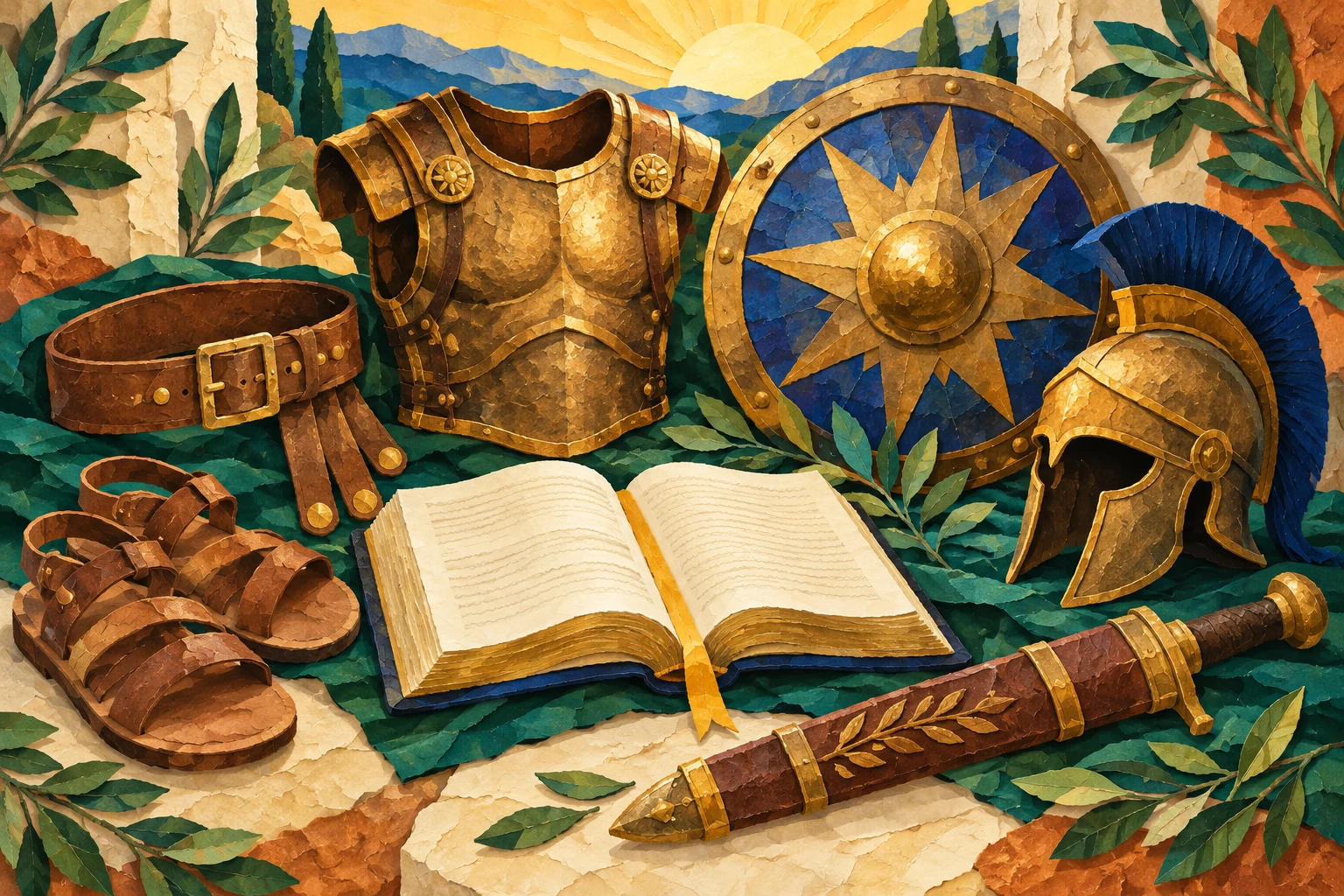
Paul wrote to Christians about living as God’s people. Near the end of Ephesians, he told them to be strong in the Lord. Their strength would come from God, not from pretending to be powerful. He used the picture of a soldier’s armor to explain how God equips his people to stand against evil.
Paul made an important distinction: people are not our enemies to attack. Then he began naming the armor, starting with truth pictured as a belt. Believers need what is true about God and what he has done in Jesus. Lies can confuse us, but God is trustworthy.
Jesus told his followers to continue in his teaching and know the truth. We learn his teaching by reading Scripture with help. We can also practice honesty: admitting a mistake, checking a story before repeating it, and refusing the lie that our worth depends on winning. God’s truth holds us steady.
THE JESUS CONNECTION
Jesus brings us God’s truth and grace. Following him includes trusting his words and speaking honestly.
CONVERSATIONS THAT MATTER
Talk it through.
1. Where does our strength come from?
Guide the conversation: From the Lord, not from acting tough.
2. Are other people the enemy in Paul’s picture?
Guide the conversation: No. We are to love people while resisting evil.
3. What could you do after telling a lie?
Guide the conversation: Tell the truth, ask forgiveness, and get help to repair the harm.
LEARN BY DOING
Truth holds us steady
- Make a paper belt-shaped strip without fastening it around anyone. Write TRUTH in the center.
- Read two invented claims: God only loves winners; hiding a mistake is always best. Ask which need correcting.
- Read Romans 5:8 and Ephesians 4:25 from your Bible. Write or draw truthful responses on paper loops and join them to the strip.
- Partners practice: I need to tell you what really happened. Display the paper belts as reminders, not protective objects.
GRADES 1–2
Make it concrete.
Use a heart picture for God’s love and let children dictate a truthful sentence.
GRADES 3–5
Take it deeper.
Explain the difference between a fact, an opinion, and an unverified rumor using an invented example.
Offer a quiet workspace, movement breaks, picture choices, or an adult scribe. Adapt to the child’s needs rather than relying only on grade.
RESPOND & REMEMBER
Let faith take root.
Prayer invitation
God, thank you for being trustworthy. Help us recognize truth and speak honestly with love.
One last question
Name the first armor picture and one way to live truthfully.
Student page answer guide
1. From the Lord, not from acting tough. 2. No. We are to love people while resisting evil. 3. Tell the truth, ask forgiveness, and get help to repair the harm.
Drawings and personal reflections have varied answers. Look for understanding rather than polished artwork.
Teacher reflection
What did the children understand? Whose voice did you hear less? What question will you revisit next week?